Showing posts with label share. Show all posts

Wednesday, January 16, 2013

TA 2013 Malaysia Outlook: Ride the Volatility

By TA Securities,

We believe 1H13 will be a choppy period and election concerns could drag down the FBM KLCI by 8% to 10% in the period before market rebounds in the 2H13. The impetus for revival will mainly hinge on the end of election overhang and strong domestic demand.


Sustained monetary easing on the back of low inflationary pressure and attempts to reduce budget deficits by cutting subsidies and channeling the savings to productive ventures are positive despite the short-term impact on earnings. Overall, domestic economy will play an integral role in sustaining confidence in domestic equities next year in the absence of any overwhelming micro drivers.


Corporate earnings for 9M12 were less robust and we forecast full year earnings growth for the FBM KLCI to be 9.4% only. Chances of a strong revival in the immediate-term are minimal based on external sentiment and dwindling demand in key export markets. Our earnings growth forecast of 8% and 8.4% for CY13 and CY14 is not compelling vis-a-vis key regional emerging market's 16.1% and 14.7% respectively. It could come under further pressure if the implementation of minimum wages had greater impact in raising the input cost than the intended increase in disposable income and spending. High likelihood of subsidy cuts (electricity tariff and fuel price increases) post 13th General Election would be negative on earnings and will prompt us to trim our CY13 and CY14 forecasts by 1.2% and 4.9% respectively.


How about Foreign Markets?
External factors will continue to dictate the market directions. The structural flaws cannot be undone overnight but expect bouts of positive improvements to kick in the 2H13 as fats are trimmed and jobs created. China could revive its domestic growth without stoking inflationary pressure but it can be destabilizing factor if its row with Japan escalates. The same applies to Iran and the West.

Can KLCI end Strong this year?
We derived our end-2013 target of 1,710 for FBM KLCI after applying 2008-2011 average forward PER of 14.3x on mid-cycle EPF of 120 sen. The underlying key assumption is that BN will return to power with slim majority. This target is a 5% discount to our bottom-up valuation of 1,800.

FBM KLCI performance before and after 2008 Malaysia's election
Strategy...
Sell-on-strength, especially overvalued defensive plays in the Consumer, Healthcare and Telco sectors and turn cash-heavy to accumulate high beta plays in domestic sectors, which are mainly related to Construction, Oil & Gas and Property sectors, in 1H13. Banking sector holds good buys based on their attractive valuation, still robust loan growth and bright chances of benefiting from ongoing domestic expansions.


Source: TA securities report

Monday, October 8, 2012

RHBRI Market Outlook & Strategy 4Q2012: Stormier Outlook


RHB research institute (RHBRI) is of the view that it could still be a choppy few months for the equity market in the 4Q given weakening economic fundamentals in the major world economies and fears of an imminent general election on the home front. Whilst more rounds of quantitative easing have been unveiled in the developed world, the big question in investors’ minds is how all these quantitative easing measures will translate to better global economic outlook. Having said that, equity still stands up vis-a-vis the unappealing returns of the alternative asset classes, such as cash and bonds and any good news is still likely to prompt a rally in equities.


How was Malaysia fared?
And, what's the strategy now?
Thus far, Malaysia has fared relatively well in the global financial crisis, and this is partly on account of low reliance on foreign funding of its banking system and more importantly, the progress in the implementation of the Economic Transformation Programme to boost domestic demand and cushion the economy against the downside risk from the external sector. As a result, the economy has bucked the trend and its real GDP growth is projected to pick up to +5.4% in 2013, from +5.0% estimated for 2012. This will translate to sustained earnings growth of around 6.0% in 2013 to create new shareholders’ values for investors.


We believe after a phase of correction and consolidation, the market will come back as the huge bond purchase programmes in the Eurozone and the US will push investors out of low-yielding cash and bonds over time into riskier assets such as equities. As the general election could be delayed to March 2013, our end-2012 FBM KLCI target remains unchanged at 1,690. Assuming global situations stabilize in six to nine months time and the global economic recovery is intact, our end-2013 FBM KLCI target is 1,815, based on 15x 2014 earnings.


Whilst our core strategy remains defensive, we believe investors would still need to accumulate fundamentally-robust stocks on weakness in order to outperform the market. In addition, as the search for yield will likely remain a key driver for both retail and institutional investors in the 4Q, high divided-yielding stocks will also continue to outperform the market, in our view. Sector-wise, our key overweight are telecommunications and banking, although we also have an overweight stance on the utilities and healthcare sectors.


Source: RHBRI research report

Tuesday, September 4, 2012

New IPO: IGB Reit


IGB REIT comprises of Mid Valley Megamall (retail; 1.72m sf NLA) and the Gardens Mall (retail; 0.82sf NLA) with a total appraised value of RM4.6b. Currently, Mid Valley Megamall is 99.8% occupied and the Gardens Mall is 99.7% occupied. Based on the IPO price of RM1.25, IGB REIT’s market capitalization would be RM4.3bn, making it the largest pure retail M-REITFollowing closely behind IGB REIT in terms of market capitalization size is Pavilion REIT (RM4.08b), Sunway REIT (RM4.02b) and CMMT (RM3.02b).


What are the key selling points for IGB REIT?

  1. Prime asset with strategic location, huge catchment area and well connected transportation networks.


  2. Diverse based of tenants to sustain rental income.

  3. Low gearing provides ample room for acquisition growth. Based on IGB REIT’s Pro Forma Statement of Financial position, IGB REIT’s gearing ratio upon listing will be approximately 25.8%, which is below the average of listed MREITs of approximately 29.2% as at 31 Dec 2011. Hence, for future acquisition, IGB REIT has the flexibility to borrow additional RM1.1bn before reaching the statutory gearing level of 50%.


What's the fair value?
As shown below, different research house gave different fair value by using different method of valuations. To summarize it, the fair values estimated could give investors an upside potential of between 7.2% - 16%. Does this enough for you to consider to subscribe this IPO? Anyway, only 1% of the shares were being allocated to retail investors. Good luck.


Source: Various research report

Tuesday, April 3, 2012

RHBInvest: Now you can TRADE and FLY

Other than competitive brokerage fees, brokerage firms are battle it all out to gain market share by dishing out all kind of freebies. Those who did not make the move would definitely lose their market share to other competitors. Last year, we noticed that many brokerage firms were competing in fees charged. But, RHB investment bank has their own way - RHBInvest HOTTIE Rewards programme.


Let your investment take you on Vacation!!!
Under the programme, every broking transaction done on RHB's online share trading platform (RHBInvest) will be rewarded with loyalty points. Every RM1 spent on brokerage fees will earn 1 HOTTIE point and every HOTTIE point can be converted to 500 BIG points from AirAsia's BIG Loyalty global reward programme.

The accumulated BIG points can be redeemed for AirAsia's seats and for shopping at 1,500 BIG's associated partners and online merchants worldwide.

"We expect an improvement in participation. Most brokers are competing with real estate investment trusts and customer loyalty is waning. The idea of the reward programme is not to compete on price but to give more to clients from their brokerage," said RHB Investment Bank's head of equities broking.


Source: RHBInvest

Monday, April 2, 2012

RHBRI: Market Outlook & Strategy 2Q2012


More Signs of Recovery
The tail risk from the euro-debt crisis has subsided after ECB opens its liquidity floodgates. Elsewhere, more signs of economic stabilization and recovery have emerged, particularly in the US. As the global economic recovery gains momentum, external demand for Malaysia’s exports will likely improve as the year progresses.

Domestically, consumer spending remains resilient, which will be reinforced by the progress in the implementation of the Economic Transformation Programme to sustain growth. We envisage the country’s economy to grow at 4.5% in 2012, albeit at a more moderate pace than the +5.1% achieved in 2011. This will underpin corporate earnings growth, projected at +12.2% and +7.9% for 2012 and 2013, respectively (+8.7% and +7.0% ex-Tenaga).


But, anticipate a short-term market pullback?

Notwithstanding improvements in the global economy, we continue to expect a market pullback and consolidation in the 2Q. In our view, apart from rising market caution ahead of the general election due to the uncertain election outcome, earnings will also have to play catch up for stocks with rich valuations before the market can scale new heights. On the external front, concerns on Mainland China’s economy and a potential risk of an oil-supply shock will also weigh down market sentiment.


Beyond the near-term pullback, we expect market sentiment to gradually improve as global economic uncertainties clear out. As central banks in advance countries have unveiled more quantitative easing programmes and pledged to maintain extremely loose monetary policy to support economic growth, global financial markets are still likely to be awash with liquidity. Consequently, we are maintaining our end-2012 FBM KLCI target at 1,650 based on 14.5x 2013 EPS.


Given our more upbeat view on the market for the 2H, we believe “buy on dips” is still the best strategy to outperform the market even though defensive stocks will provide greater stability for the portfolio, particularly in the 2Q. Sector-wise, our key overweight continue to be telecommunications, gaming, Plantation, oil & gas and consumer.


Source: RHBRI report

Monday, March 5, 2012

RHBRI: 4Q11 Earnings Review and Market Strategy


In tandem with the moderating economic growth trend, corporate earnings remained weak in 4Q 2011Of the 113 reported earnings that we cover, 55 of the results (48.7% of the total) were within our expectations, 33 below projections (29.2% of the total) and 25 above forecasts (22.1%) (see Table 1). Against the consensus numbers, 44.2% of the reported earnings were within expectations, 38.1% below and 17.7% above projections (see Table 2). Sequentially, net EPS for the FBM KLCI stocks under our coverage weakened back to +1.7% qoq and +2.8% yoy in the 4Q, from +8.9% qoq and +12.4% yoy in the previous quarter (see Chart 1).


However, the downgrade to upgrade ratio has improved significantly to 1.07 times, from 1.65 times in the previous quarter. Overall, 2011 has been a year where Corporate Malaysia suffered from slowing sales and falling utilisation rates. This, coupled with the trend of higher costs, resulted in falling margins for many companies under our coverage. Consequently, normalised net EPS growth for the FBM KLCI stocks under our coverage slowed sharply from 20.9% in 2010 to +4.7% in 2011. The sharp slowdown in EPS growth, however, partly reflected the higher base effect as well as the plunge in Tenaga’s earnings arising from the gas curtailment issue. Excluding Tenaga, our 2011’s normalised net EPS for the FBM KLCI stocks has slowed down less significantly to +10.1%, from +21.2% in 2010.


Businesses Turning More Upbeat

What’s worth highlighting is that Corporate Malaysia are becoming less pessimistic and expect their business prospects to be stable with prospects of it turning up gradually as the year progresses. Likewise, we expect almost all sectors to record flat or improved earnings in 1Q 2012, with the exception of transport and semiconductor sectors. In our view, earnings of the transportation companies will still likely to be weighed down by slower economic growth and rising fuel costs. Whilst we also expect the semiconductor industry to suffer weak earnings in the 1Q, its outlook should improve from 2Q as cost rationalisation and stronger chip sales will likely translate into a significant improvement in earnings thereafter.

Meanwhile, we have seen more aggressive inventory write-down by companies, particularly amongst the steel product manufacturers. At the same time, banks could have also made pre-emptive provisions for loan impairment. Consequently, barring unforeseen circumstances, the downside risk to corporate earnings may not be as significant moving forward and analysts have turned less pessimistic in their assumptions for earnings projections.


Earnings Revised Up

Overall, we have adjusted some of the assumptions, translating to an upward revision in our 2012’s normalised net EPS growth for the FBM KLCI stocks under our coverage to +12.3% (see Table 3), from +10.3% previously (as reflected in our 2012 Market Outlook & Strategy Report dated 16 December, 2011). Excluding Tenaga, our 2012’s normalised net EPS for the FBM KLCl stocks has also been revised up to 8.8%, from 7.8% two months ago. The upward revisions in earnings were more significant in the oil & gas, consumer and utilities sectors (see Table 4). Similarly, our 2013 earnings estimate for the KLCI benchmark has been tweaked up slightly to 7.9% (+7.0% ex-Tenaga), from +7.3% (+5.5% ex-Tenaga) previously.


General Election Will Create Volatility,
Not Likely To Be A Game Changer

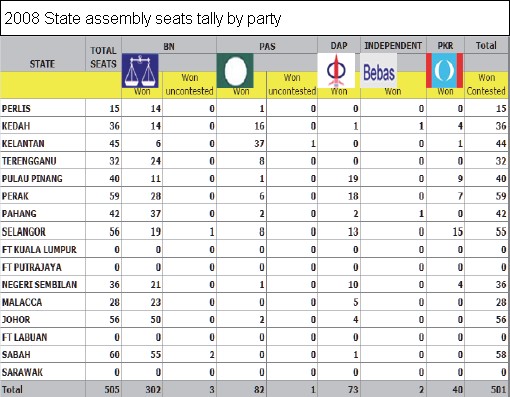
On the local front, a key event that will have significant bearing to the equity market is the impending general election. There are strong market expectations that the country’s general election (due in March 2013) will be held any time soon. Given what happened during the previous general elections on 8 March 2008 where the ruling coalition, Barisan Nasional (BN), lost two-thirds majority, there are fears that if BN were to lose a simple majority, the local bourse could suffer a major temporary setback. This is on account of uncertainty in the continuity of the country’s economic policies that could slow down the implementation of the economic Transformation Programme (ETP). We, however, believe that the likelihood of this happening is low.


Market Strategy :
Buy On Dips With Increasing Focus On Recovery Sectors

Whilst not all the external risk factors have gone away and the impending general election locally could also create uncertainty for the local bourse, the global economic recession risk is receding. Consequently, we are turning more positive on the market. Nevertheless, as fundamentals are just starting to improve, earnings will still need to play catch up for stocks with rich valuations before the market can scale new heights.

Consequently, the risk of a market pullback and consolidation in the near term is still high although we believe that any volatility in the market would provide opportunity for investors to accumulate fundamentally-robust stocks on weakness. We are also turning more positive on cyclical sectors that are poised for recovery, although investors’ risk perceptions can still change very quickly should situation turn out to be worse than expected. As a result, we would still recommend investors to hold some defensive stocks that have strong cash flows to pay sustainable dividends. A list of our top picks is reflected in table below, which includes “buy on weakness” tactical holdings.


Source: RHB Research Institute report

Thursday, March 1, 2012

OSK's March 2012 Outlook and Strategy


While Malaysia remained a laggard compared to the rally in developed markets, the global rally that had started in January finally dragged the local bourse kicking and screaming up during February with a rally of more than 3%. Globally, markets continued to rise despite the patchy fundamental landscape. Thus, while we had anticipated a potential rally in the 1st half of February, our expected market retraction in the 2nd half failed to materialize.


Top Gainers for February were dividend plays such as Carlsberg or companies with corporate activities such as Hartalega with its bonus issue or potential targets such as RHB Cap and MBSB. Smaller plantation companies such as TH Plantations and RImbunan Sawit also had a good run.

On the flip side, companies with poor results such as Maybulk, MAS and KNM got sold down. On a broader sectoral basis, telcos were the dominant play. It was the return of the Big Caps in February as the catch-up played by the KLCI meant that big caps ran up with the inflow of foreign funds.


KLCI year-end target set at 1,620 pts!!!

Moving forward, we unveil our KLCI year-end target at 1,620 pts. This is derived from the average of our 2012 and 2013 fair values at 1,466 pts (13.5x PER) and 1,775 pts (15.0x PER) respectively. We still believe that weak fundamentals justify a lower PER than the historical average of 16.6x for the KLCI. While we remain unconvinced of the current rally’s fundamentals and still see a risk of market correction, news flow with regards to large infrastructure investments should help the KLCI post a stronger 2H2012.


The derivation of our target is as such:
  • There is no change to our 2012 KLCI fair value of 1,466 pts based on 13.5x PER on 2012 numbers
  • We still believe that weak fundamentals justify a low PER for 2012 and that there may be mid-year weakness in global markets
  • We derive our 2013 KLCI fair value of 1,775 pts based on 15.0x PER on 2013 numbers
  • The higher PER of 15.0x is based on 0.5 std dev below the historical average 16.6x PER of the KLCI
  • We are still holding back from applying a historical average PER as we remain concerned on overall global economic fundamentals
  • Nonetheless, the global liquidity fuelling the current rally could continue to drive markets and the news flow with regards to large infrastructure investments should keep the KLCI buoyant in 2013. Hence, we apply a higher PER compared to 2012
  • Our 2012 KLCI year-end target is the average of the 2012 and 2013 fair value which gives a figure of 1,620 pts


Upgrading market call to NEUTRAL
Rolling forward our investment outlook horizon and nothing that the year-end target gives some 3.2% upside to the market, we upgrade our call on the market from Sell to NEUTRAL. Given our view that this is a Liquidity-Driven Rally with risk of correction, we recommend investors take a Balanced approach to the market for the remainder of 2012. As the market could still turn south in the middle of the year, we keep some Defensive stocks among our Top 10 Buys. At the same time, the burgeoning news flow on Construction and Oil & Gas means we recommend investors take some positions in these sectors. We, thus, expand our Top Sector calls from Consumer and Telcos to also include Construction, Oil & Gas and Banks.


Top Buys are a balanced mix
Our revised 2012 Top Buys represent a balanced mix of Defensive and Cyclical stocks with a range of deep value to reasonable yield plays. Our Top Buys are Maybank, CIMB, Axiata, TM, Gamuda among the Big Caps and Dialog, KPJ, QL, Padini and KimLun among the Mid and Small Caps.


For March, given the uncertainty remaining in the market, we introduce a balanced Big-Small-Cyclical-Defensive portfolio. As such, we select Maybank, CIMB, Axiata, Gamuda and KPJ as our March top buys.


Source: Excerpt from OSK Research report

Saturday, January 14, 2012

Annual Strategy 2012 by TA Securities


2011 had triggered a wave of unwanted chain effects, which would not languish but resonate further into 1H12. While Japan is recovering from the worst ever tsunami and nuclear disaster, and oil prices stabilized after the unrest in the Middle East, conditions in Europe are expected to worsen before stabilizing.


Global Economy – Risk Factors Extending into 2012

Positive news flows on drastic measures to restore confidence in Europe and maintain the credit ratings of core economies could boost market sentiment in early 1Q12 and push the index to test the all‐time high of 1,597. However, the reality check on the implication of European austerity measures and rising market risk premium due to the 13th General Election (GE) could push the index around 1,200 levels in 1H12 based on a minus two standard deviation from its last decade’s historical mean of 16.6x.


A revival should ensue in the following months due to oversold conditions and anticipation of a subsequent recovery in Eurozone economy by mid‐2013 as markets move ahead by about six months. Our end‐2012 target is 1,520 based on a mid‐cycle PER of 13x.


Malaysia – Not Insulated


In the first nine months of 2011, the Malaysian economy registered a modest growth of 5.1% YoY thanks to the robust domestic demand and strong exports. In some ways, despite the turbulent external environment, rebuilding and reconstruction activities in Japan had helped spur Malaysia’s exports advancement during 3Q11. Nevertheless, the external sector is expected to remain challenging in 4Q11 before embracing a slowdown in 2012 amid the budget deficit cuts in the European Union, the slow economic rebound in the US and the anticipated softening of China’s economy. Hence, we expect Malaysia’s economic growth to narrow to 4.6% in 2012 following a 5.2% growth expectation for 2011.


On the fiscal front, the financial status of the Federal Government may continue to improve in tandem with the embodiment of fiscal prudence and boost in revenue. Overall consumer prices are expected to increase by 2.5% while monetary policy is expected to remain accommodative (OPR stable at 3.0%). A potential wild card is the reform agenda initiated by Prime Minister Najib Tun Razak. Factors that would accelerate reform include:
  1. increasing political consciousness and demographic shift,
  2. reenergizing investment in the local economy, and
  3. strengthening fiscal credibility. Sectors that could benefit are Banking, Property and Power.
Political Risk?
We strongly believe the country’s 13th general election will be due in 1QFY12, especially before the parliament convenes in March. This could be a major dampener upon dissolution of the parliament as investors would exit and remain on the sideline until the outcome is known and the implications are digested. The ruling coalition is expected to retain its victory but its grip on parliamentary and state seats are expected to weaken. Thus, the effectiveness in implementation of policy reforms and domestic expansionary measures could be compromised and will be closely watched in 2012. With the backdrop of slowing external demand, spending on domestic infrastructure, construction and oil & gas sectors would be the key focus in 2012.


Investors should take profit on any rally over the next three months and wait to cherry pick. Traders should take short‐term positions to trade, mainly on blue chips, in anticipation of a year‐end and New Year rallies and exit by March. We expect higher downside risks in 1H12 as the flow of negative economic data, earnings downgrades and possible 13th general election hurt investor sentiment.

Top Picks for 2012

We reiterate defensive approach in stock selection in current uncertain period and bottom up approach in choosing value picks. Preferred buy picks are KIANJOO (TP: RM2.58), SEG (TP: RM2.51), SUNWAY (TP: RM3.16), BJTOTO (TP: RM4.92), BSTEAD (TP: RM6.21), KPJ (TP: RM5.04), GENM (TP: RM4.50), SAPCRES (TP: RM4.93), GAMUDA (TP: RM3.71) and SIME (TP: RM10.12).


Source: TA Securities

Thursday, December 8, 2011

OSK Strategy and Outlook (Dec 2011)

Essentially, with the uncertainties in Europe continuing amid a potential global slowdown in the economy, we will continue to see market volatility in the next few months. As such, we continue to advise investors to be patient and focus on Defensive counters, while looking out for opportunities to Trade. We continue to advocate Buying into Weakness when the KLCI falls towards the 1,300-pt level, focusing on Banks, O&G and Construction stocks while we advocate Selling into Strength on the same three sectors when the market rallies towards 1,500 pts.


Festive Cheer in December?

While we remain fairly defensive over the mid term, December may still be a bright spot amid the gloom. There is still a possibility of the traditional year-end rally and the just announced joint effort by various central banks, including the US Federal Reserve, the European Central Bank, the Bank of Japan, the Bank of England, the Swiss National Bank and the Bank of Canada to provide liquidity may just convince markets that there will indeed be a coordinated global effort to tackle the sovereign debt woes.

These central banks will be reducing interest rates on dollar liquidity swaps by 50 basis points. While we doubt that this will be the magic pill for Europe and the world, there may just be enough optimism and hope left in December to see markets rise towards the year end. As such, we see a possibility that the KLCI may still rise to end the year in positive territory, close to our 1,533-pt year-end target, although ultimately economic woes in Europe should drag it down towards our 1,466-pt 2012 Fair Value.

Asian governments also getting into the act. The efforts by central banks is also being supported by Asian countries with the Chinese government cutting reserve ratios for its banks, while Thailand announced its first interest rate cut since August 2009. As such, there could also be a regional boost to support the global effort.

OSK Stock Picks for December 2011

Throwing in some cyclical names in December
Given our view that the KLCI may possibly rise in December with the coordinated efforts by central banks worldwide to put on a united front (at least till the end of 2011), we introduce more cyclical names into our Top Buy list, such as Maybank (replacing Axiata that has done very well) and Dialog (replacing the ever defensive KPJ Healthcare).


Source: OSK Research Report

Wednesday, December 7, 2011

RHBRI's Stock Watch (December 2011)

In contrast, the better-than-expected results of Maybank came mainly from lower-than-expected credit cost and minority interest charged, partly offset by weaker-than-expected non-interest income. In addition, the change in accounting treatment for the recognition of profit equalisation reserve also helped lift earnings.


The stronger-than-expected revenue growth of DiGi, on the other hand, came from stronger data and prepaid voice, aided by festivities, as well as improvement in consensus, were above our forecast on account of better-than-expected EBITDA margins on the back of lower other operating costs and supplies & materials expenses, as well as lower effective tax rate.

During the quarter, BAT experienced stronger-than-expected industry volume growth, while earnings of Genting Plantations were boosted by stronger-than-expected increase in FFB production.

The Under-performers...
Sector-wise, earnings of the semiconductor, building materials, construction, motor, transportation, oil & gas and healthcare continued to disappoint. In addition, the insurance sector which reported stronger-than-expected results in the previous two quarters, succumbed to higher-than-expected claims ratio (as in the case of MNRB Holdings and Kurnia Asia) and lower investment income (LPI Capital) and disappointed this time round.

In the semiconductor/IT sector, both MPI and Unisem sufferred from lower revenue and EBITDA margins on account of lower contribution from higher margin chip packages. The results of Notion Vtec, however, were above our forecast due to better EBITDA margins and operating income from the sales of raw material scrap.

Within the building materials sector, steel players continued to suffer from downturn in the industry and margin contraction as a result of lower selling prices of steel products. Out of the five steel manufacturers we cover, two earnings were below forecasts (CSC Steel and Ann Joo Resources), one in line (Kinsteel) and two above projections (Hiap Teck and Perwaja). In addition, the two cement manufacturers (Lafarge and YTL Cement) also experienced lower-than-expected sales volume and prices on account higher cement price rebates.


Of the eight construction stocks that we cover, two results were below our expectations (MRCB and TRC Synergy) and the other six within our forecasts (Gamuda, IJM, WCT, HSL, Fajarbaru and Eversendai). The variance of MRCB’s earnings against our forecast came largely from lower-than-expected billings for both construction and property divisions, and to a ceratin extent, the lower-than-expected margins. The earnings of TRC Synergy, on the other hand, were dragged down by higher start-up costs from infrastructure projects, particularly the RM950m “package A” main contract of the Kelana Jaya LRT Line extension project.


Similarly, results of the oil & gas sector were also below forecasts as four out of the 10 stocks we cover reported disappointing results (MMHE, Wah Seong, KNM and Perdana Petroleum), five within expectations (Petronas Chemicals, Petronas Gas, Wah Seong, Kencana and SapCrest) and one above forecast (Dayang Enterprise). As mentioned earlier, earnings of MMHE were below projection due to a drop in revenue from the E&C division. During the quarter, Wah Seong’s results were dragged down by forex losses on its contracts on hand and higher-than-expected minority interest, while that of KNM by provisions, likely for cost overruns incurred under legacy contracts won in 2009 to 1H FY2010. The earnings of Perdana Petroleum were hit by lower utilization of the company’s vessels and losses from associate,
Petra Energy due to the Kumang Cluster project. In contrast, Dayang’s earnings were above forecast, boosted by better-than-expected margins from the marine charter division and lower-than-expected interest cost.


Market Strategy: Stay Defensive

Despite the deepening euro debt crisis and a struggling US economy, global equities have been more resilient than what we had expected. However, in the absence of a concrete solution for the euro debt crisis and given that US politicians are too divided to resolve a dispute over taxes and spending, concerns are growing that things could turn from bad to worse in the months ahead. Consequently, we believe investors are still in for a volatile year ahead. Under such circumstances, we continue to advise caution, and this is reflected in our top picks, which include companies with stable cash flows and above-market yields.


Source: RHBRI report

Wednesday, November 23, 2011

New IPO: Pavilion REIT


Are you bored of the current small market capitalization of REITs in Malaysia? I think Sunway REIT (the largest REIT right now) is by far sitting there very lonely without anyone closer to it. Come 7th December 2011, we will witnessed a new contender - Pavilion REIT, to challenge the title. Although it may started-off in 2nd place, the new REIT may grows to clinch the first place from SunREIT. Below is some info taken from RHB Research report on the IPO;


Pavilion REIT (PavREIT) has an asset size of RM3.5bn, just after the largest MREIT - Sunway REIT’s RM4.5bn. PavREIT has two assets – Pavilion KL Mall which is worth RM3.4bn and Pavilion Tower (office) RM128m.

The Prime Asset

Pavilion Mall is one of the only four premium retail malls in KL. It is designed to complement the malls along Jalan Bukit Bintang, developing the street to a key shopping destination in the region. Located at the “Golden Triangle”, which is the business, shopping, entertainment and tourism district, the mall enjoys massive catchment of population. It has an NLA of 1.33m sqf.


Since it commenced its operations in late 2007, occupancy has consistently stayed above 96%, with a 3-year CAGR of 4% in average rental rate. With such a short operating history, the mall has recorded 31m visits in 2010, comparable to Suria KLCC’s 40m footfalls. Over the longer term, Pavilion Mall is poised to enjoy higher number of visits as it will sit near to the upcoming MRT station, which is less than 300m away. The covered skybridge currently under construction that connects Pavilion Mall and KL Convention Centre which in turn adjoins Suria KLCC and the Petronas Twin Towers, will also pull in more shopper traffic between the two tourist spots.


The Pavilion Tower (NLA of 167k sqf) is an office tower connected to Pavilion Mall. It currently has an occupancy rate of 41.4% (expected to achieve 80% by year end), housing Malton roup, Mrail International, Clever Eagle and Aker Engineering (from 1st July). As the office tower only contributes about 2% to total rental income, coupled with the oversupply of office space in KL city centre, we are neutral on this commercial asset.

Future Growth Potential

Three other retail assets can potentially be injected in future for growth. PavREIT has been granted rights of first refusals (ROFR) by its sponsor and a 3rd party to purchase fahrenheit88, Pavilion Mall extension and an upcoming community mall in USJ Subang. These assets are estimated to have a combined value of about RM1.5-2bn. We believe the injection of assets will take 2-3 years, as only farenheit88 is still in the early stage of operation, and the other two malls will only be completed in three years’ time.


How to Value?

We benchmark PavREIT against KLCCP. Although KLCCP includes non-retail assets such as office towers and hotel apart from Suria KLCC, all these assets are of Grade A class. To reflect its prime status, we value PavREIT at a target yield of 5%, which is close to the average yield of 4.72% for KLCCP over the past 5 years (we gross up to exclude the impact of corporate tax – as REITs do not have corporate tax component). This translates to a fair value of RM1.14, based on our FY12 DPU estimate.

Source: RHB Research report


Tuesday, August 16, 2011

CLSA Top 5 Picks during volatile times (16 Aug 2011)

After an unexpected AAA rating downgrades and an expected correction, KLCI is coming down from its peak of 1,597 points in early July. CLSA come out with a timely report highlighting 5 stocks which investors should focus on even during volatile times. These stocks have resilient earnings, clear earnings visibility and are supported with dividend yields.


CLSA: YTD major indices performances as at 08 Aug 2011.

Which are the counters?

Axiata - Turning into a cash cow
  • Axiata's earnings will remain resilient during downturn as EBITDA is dominated by cellcos in Malaysia and Indonesia where price competition is muted these days.

  • From a highly geared company in 2008, Axiata is now turning into a cash cow with forecast yield rising to 10% in FY13. CLSA is expecting dividend yield of 3.6% for FY11, translating into total shareholders return of 10%.


Gamuda - Risk discounted
  • The 22% share price fall from 52-week high has discounted its Vietnam investment risk. US$600m market cap loss is more than its US$350-400m investment to date.

  • FY12 earnings are underpinned by high-margin construction orderbook worth RM2.7bn, unbilled property sales of RM1bn and recurrent infrastructure earnings.

  • MRT project news flow catalyst. Potential 26% upside to RM4.20 target.


Genting Malaysia - Growth, value and net cash
  • Its investment thesis remains geared towards growth as the UK casinos rebounds off a low base and the New York facility begins maiden contributions.

  • Gaming revenue, particularly in Malaysia, is uncorrelated with economic health. Balance sheet remains robust and it is among the most attractively valued gaming stocks globally.


Maybank - Resilient dividend yield
  • Regional expansion strategy through Kim Eng acquisition is earnings accredited.

  • Rising productivity and cross-selling activities will improve ROE and regaining domestic market share in profitable loan segments and investment bank deals.

  • High net yield of over 6% in FY12, supported by dividend reinvestment plan.


TM - Potential for special dividend
  • TM is recording strong growth for HSBB and this product could turn EBITDA positive earlier than expected.

  • Management undertakes active capital management and we are expecting special dividend of 3.3% from recent sale of Axiata shares.


Source: CLSA article dated 09 Aug 2011

Sunday, July 3, 2011

OSK Stock Picks for July 2011

While fears of an European sovereign debt default reverberating worldwide, Malaysia quietly outperformed most of the world in June as the Banking sector led the KLCI higher after the potential M&A of RHB Cap was called off . We had expected the KLCI to trend higher led by banks but our hope was founded on potential excitement driven by the merger rather than on sighs of relief that there would be no overpaying for RHB Cap.
OSK Research: Top Gainers and Losers of FBM 100 during the month of June 2011.
July looks to be a Strategist’s fantasy?
With numerous announcements related to economic reform and infrastructure developments lined up for July, namely:
  • 1 July – The launch of the ETP River of Life project involving the rehabilitation of the Klang River;
  • 5 July – The 7th ETP update during which the PM will also unveil PEMANDU’s efforts to classify some 37 policy change recommendations made in the NEM into 6 Strategic Reform Initiative (SRI) clusters that will signal real economic reform and serve as enablers to the ETP projects;
  • 8 July – The ground breaking ceremony of the ETP KL MRT project.
Coupled with what appears to be increasing foreign interest in the Malaysian market, July looks to be every optimistic strategist’s dream as the market may well scale higher from its already record levels. Only the risk of unrest related to the planned rallies (now banned) on 9 July appears to be casting a cloud over the July outlook. Even the global outlook has improved with problems in Greece appearing resolved until another day.

OSK Research: Foreign shareholding level still depressed as of March 2011

ETP has been well marketed...
The heightening foreign interest in Malaysia appears to have stemmed in part from the marketing efforts of PEMANDU in promoting the ETP. As economic reform moves into the next gear with the mapping out of details on how the New Economic Model’s policy reform can serve as enablers of the ETP, we believe that the buoyant foreign sentiment can be sustained. Thus we continue to advocate buying of sectors which will benefit from the ETP, namely Banking, O&G, Construction and Property.

Top Buys reflect our 2H2011 outlook
For July, we stay with our favourite sectors in naming our Top Buys, with Banks (Maybank), Construction (Gamuda), Property (UEM Land) and O&G (Dialog) all fielding a representative each. We also present a Top Buy from the Steel sector (Perwaja) in line with our recently upgraded view on the sector on account of potential M&As and handing out of Iron Ore mining concessions.

OSK Research Top Picks for July 2011
Source: OSK Research